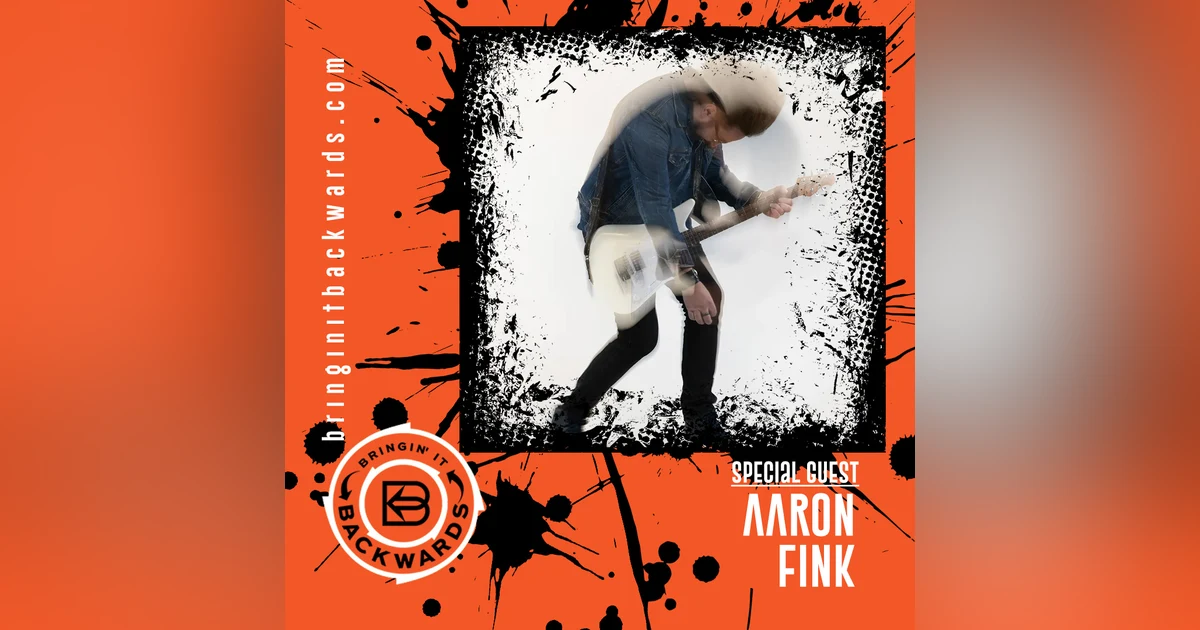
BiB: Aaron Fink: Why Breaking Benjamin’s Former Guitarist Is Betting on Himself


 YouTube YouTube
 Apple Podcasts Apple Podcasts
 Spotify Spotify
 Castro Castro
 RSS Feed RSS Feed
 Pandora Pandora
 Amazon Music Amazon Music
 Audible Audible
 iHeartRadio iHeartRadio
 Soundcloud Soundcloud
 PocketCasts PocketCasts
 TuneIn TuneIn
 RadioPublic RadioPublic
 Deezer Deezer
 Spreaker Spreaker
 Castbox Castbox
 JioSaavn JioSaavn
 Gaana Gaana
 Podyssey Podyssey
 PlayerFM PlayerFM
Aaron Fink is back—and he's bringing a fresh chapter to his already multi-faceted music journey. On this episode of Bringin’ It Backwards, Adam and Tera Lisicky catch up with Aaron over Zoom in his third appearance on the podcast. This time, it's all about his new solo album, The Invisible Line, and the creative process behind it.
Aaron pulls back the curtain on what it's really like to juggle projects—from his time with Breaking Benjamin, to reuniting with Lifer, recording with Earshot, and finding his artistic voice as a solo act. He dives into the realities of recording (including why he does almost everything himself), what inspires his songwriting, and how the industry has changed for independent artists. Plus, Aaron gets candid about the struggles of touring these days, the personal shifts that come with growing older, and why it’s more important than ever to create for the love of the music.
If you’re an aspiring musician trying to make sense of how to thrive in today’s music world, or just a fan of Aaron’s work across his bands and solo material, this episode is packed with honest, hard-earned insight. Make sure you listen to the full interview and subscribe to Bringin’ It Backwards for more stories straight from the artists themselves.
We'd love to see you join our BiB Facebook Group.
0:00 What is going on? It is Adam. Welcome back to Bringing It Backwards, a podcast where both legendary and rising artists tell their own personal stories of how they achieve stardom. On this episode, we had a chance to hang out with Aaron Fink over Zoom Video. This is actually the third time we've had Aaron on the podcast. We had him on a couple of times in 2021, March, and then in August, the first time with his band Earshot and then alongside Nick with the band Lifer. This time around, Aaron joined us to talk about his brand new album which is called the Invisible Line. We kind of recapped a little bit on the first two interviews we had, but we talked a lot about Aaron's solo project and he gets into detail about his process when it comes to writing for Earshot or Lifer or for himself and how he plays all of the instruments on his solo project, talks about the recording process of this new album.
0:58 So we really do a deep dive into Aaron's creative process when it comes to working on songs and records solely for his solo project. You can watch the interview with Aaron on our Facebook page and YouTube channel at bringing it Backwards. It'd be amazing if you subscribe to our channel like us on Facebook, follow us on Instagram, Twitter and tick tock at Bringing back Pod and. And if you're listening to this on Spotify, Apple Music, Google podcasts, it would be incredible if you follow us there as well and hook us up with a five star review. We'd appreciate your support. If you follow and subscribe to our podcasts. Wherever you listen to podcasts, we're Bringing. It Backwards with Aaron Fink.
1:47 Bringing it backwards. Bringing it backwards. Bringing it backwards. Bringing it backwards. Bringing it backwards. Hey, what's up Aaron? How are you man? What's up dude? I'm good, man. How are you? Excellent. Awesome. Thank you so much for, for doing this. I'm super excited to have you on again. Yeah, me too. I think it's been, I don't know, at least two years since we talked or something. Right? Yeah, I think last time it was with Lifer.
2:28 Yeah, very nice. Yeah. So it was. Yeah, there the first time it was just you with Earshot. I think I want to say yer. Maybe Nick was on with you Believe. Does that make sense? Yeah, Always doing something, it's hard to keep track. Yeah, man, well, yeah, you got so much going on all the time. Well, I again, I appreciate you doing it again. So you kind of know what the drill. We talk about you and your journey in music and you said you have a new album? Yep. My new record's called the Invisible Line and that'll be out, I think in September. I'm gonna release, you know, what. What the kids Call, I guess Drip It Out. I don't know.
3:15 I'm excited, dude. Yeah. The most recent one that you put out was I Went Back Down. Is that the newest one? Yeah, that was just Tom Petty cover that I did. I. I thought, yeah, just kind of put out something familiar just to kind of stir the waters for. For my songs that'll come out later. I know that's a song that's been done a million times, but I kind of put my own spin on it. It's a little bit different than. Than you think. No. 100. Yeah, I think it's a rad, really rad version of the song. Oh, thanks, dude. Yeah. And then after I recorded that, I had seen that there was a country compilation coming out of all his songs and I was like, ah, man. So that was kind of bad timing. But I put out my song, get him to it. Right. Theirs came out first. Oh, there's just came out first. I had recorded that and then I saw in the news that that was coming out. I was like, ah. But I mean, it has been covered before. And like I said, all the versions I heard very like to the T, just straight up exactly like his. And I was like, I didn't see the point in trying to replicate something that was already great the way it was the first time. So I made mine different.
4:34 Love it. Love it. Well, I guess for the people that haven't, they should go back and watch the first two interviews. Lifer and earshot to get your. Dive into it. But we'll just recap a little bit and kind of pick up where we, you know, left off with what's been going on since last interview with. With Life. I think you had an album out at the time. Yeah, we put out consecutive singles. We never made a full length record. So that band as it is today, we put out a record in 2001 and then 2020ish. We put out like five singles in a row. So. Okay, that's what it was. Yeah, maybe it was Hate Me, Love Me. I think maybe it was a single at the time. I can't remember. Oh, yeah, yeah. So, right, so where we stand with that? It was one album and five singles, so.
5:32 Okay. Right on. So originally, tell me again, where are you originally born and raised? Right. I was born in New York state upstate, but I kind of. I Moved to Pennsylvania in the early 80s and have lived here ever since. Okay. Yeah. I thought you still were there. Yeah, yeah. Where are you at right now? You're in Nashville. Nashville, yeah. First time I talked to you, I was in San Diego, and then we moved to Nashville. Yes. The last time we spoke, I had been in. Yeah, we had moved to Nashville maybe like a year, and then now, obviously still here. Love it in Nashville. Yeah. I was just down there about two weeks ago.
6:15 I went down to a little town called Hendersonville. Oh, yeah? Yeah. Just. That's like thinking north of Nashville. Yeah. So I finished up some tracks for the new Earshot record. So I was down in. Oh, rad. So you guys record it in Nashville area? We did half of it in Florida and then we finished up in Nashville. Awesome. So awesome. Yeah. So you're in. Still in Pennsylvania, and that's kind of where. I mean, that's where life started. Right. And that was kind of the. Was that the first band? And then you eventually joined Breaking Benjamin, like, years later. Right. And were you embraced? So Breaking Benjamin came first, actually.
7:00 And. And. But the first incarnation of it didn't last very long, and that was in the late 90s. And then we kind of became Strange with Candy, which became Lifer. Oh, sure. Okay. And then I went back to Breaking Benjamin. So it was kind of a, you know, a complicated, convoluted mix there of a lot of the same guys in the same area and kind of, you know, stirring it up. And then Breaking Benjamin obviously hit really big. So that took off and, you know, that started a whole series change. Probably changed your life quite a bit for.
7:43 It did. Yeah. Horse. For a while. Yeah. Yeah. So, okay. Just because we've already kind of went over all these things before in the. In the other interviews. I just. Let's pick up then with. With, you know, you. You released a single with. With lifer in, like, 2020 or 2022, I think. 2021. 2022. When that. That came out and then, you know, from there. When do you start working on this album? You know, your solo stuff, like, when you have so many things going on, it sounds like you just record an earshot record. I mean, you have a lot to. Yeah. You know, kind of going on here, so. I'm always working. I do. You know, I never counted it, but I'm sure I put in about 40 hours a week, as, like, one would with a, you know, regular job.
8:32 So I'm always writing. I'm not always writing, actually. It's funny, I think about it, I go through. I usually always write in the winter. I don't know why. I guess in Pennsylvania, there's just a lot of, like, indoor time, and that seems to be when I create a lot of stuff. And then. So this past winter, I wrote most of these songs coming up that'll be coming up on the Invisible Line record, but. And then I recorded them in January and February in a studio in the Poconos, which people kind of know. Pennsylvania for the mountains, but. Oh, yeah, yeah. And then Earshot was written and recorded last summer. So it's. That album's taken forever to kind of get done. So.
9:25 But that. So that's kind of been in the can, so to speak, at least creatively, for well over a year. But I am writing a lot and recording with different things and keeping busy. I'd like to play more shows, but in tour some more. But it's just, you know, it's. It's tough these days to get that going. And it's. Yeah, really. It's not the same as it was. It's. It's a lot harder with Lifer. Like, is that you. I mean, you said you put one album out, but then, you know, five singles or so. Is that band more. You guys just kind of get together when you feel like. I. Is that more of just get together when you can type deal, and then you focus more on your shot and obviously what you're doing. Yeah, yeah. I mean, we broke up obviously there for a long time, at least 16, 17 years. And then we got back together, and then the pandemic happened. So that kind of made things very odd. And then Nick Singer. Yeah. Say the least. So Nick. And then Nick, the sing of Lifer, was in the band Cold for a while. Yeah. So he was torn with that, actually. The drummer of Lifers also in Cold. So two of those guys from Lifer went
10:57 to Cold. I think the basis of Cold has been on my show before. It's a. She's the female. Correct. I forgot. Yeah, yeah, yeah, yeah. I've had her on. Yeah. So that put kind of Lifer on ice for a while, and then I started getting back into my solo stuff. So, you know, like, we're not broken up. We're just kind of on ice for a minute while everybody's pursuing other things, you know? Yeah, yeah. No 100. And then you did. Yeah. Earshot, obviously, has just kind of been something that's continued on. Yeah, I do that whenever, you know, duty calls.
11:40 That's kind of a strange setup. We all Live in different states. And so it's not like a thing where we're hardly ever in the same room together. So I do that when, you know, when I'm asked to, basically. But. Okay, so the thing that I focus on the most is my solo stuff and I, I do that and I gig around, you know, gig and records and. And have practices and you know, so that's the main thing that I'm doing these days. Yeah, because you had an. You put out Dear Universe. But that was even before. That was after we had talked. So you hadn't even put that album out yet. Yeah. So we missed an album cycle.
12:27 Yeah. So. Okay. So. I mean. Well, I guess. Yeah. Just tell me about going into. I mean you have. You've been putting out albums under your own solstice for a long time, right? I mean for years you've had like what's gonna be like your fifth album, right? I think it's the sixth. Sixth album. Yeah. Okay. Six albums under your belt. Under. Yeah. Under your solo stuff. Like it would have loosely have plans to make 10 a la Quentin Tarantino. Okay, well then why did you just. What? Change. Change it to something else? Well, I heard, I saw an interview with him and he was. And he gave us great interview and he said he's gonna make 10 movies. And I was like, that's. That's genius. So like I'm at six. So I. I loosely have plans to make ten. So four more coming.
13:25 But yep. So Dear Universe came out. I think that came out in 2022. And that's a. I'm really proud of that record. So that was my kind of return to slightly heavier, slightly more produced music. I. I got into a vibe there where I was making more roots rock type stuff and less like very raw sounding records. And so now with, with. With Dear Universe and the Invisible Line, they're a little bit heavier, which I know people know me for. Nothing crazy, not like stuff I'm hearing younger people put out Crazy heavy. To me it's like so, you know, it's more like, I guess dad rock. But.
14:24 When it comes to like writing, like you said with, with Earshot, you all live in different states. Like are you writing with those, I mean for that band as well, alongside your solo stuff or is it totally different? Like you're just mainly when you, when you're writing, when you sit down and write, is it basically you're trying to usually write for your. Your own project? It's a good question, I think when I write. So when I'm working with Earshot. I'm writing the music, right? Writing the lyrics or the melody. So it's mostly with Lifer. Every now and then I write lyrics with Lifer.
15:09 But so with those two bands, that's more of like when I'm doing straight up riffs or verse beds or chorus beds, I usually ship them out to either Life or Earshot because I know I'm not the singer in those bands or the lyricist. So I'm like, this is a great music bed. I'll let Will or Nick sing over it and do their thing. When I have like song titles or lyrics going or melodies I usually lean towards, well, that's going to be one of my songs because I have a clear finished version for the tunes. And you know, I'm like, all right, I'm gonna sing this one. So. And I. Or I feel very strongly about the lyrics because they're personal or, you know, so they. They get reserved for. For my thing. So when you write songs for yourself, does it start with the lyrics or with the melody that you come up with instead of like maybe sitting down and you're like, oh, this is a pretty rocking riff. Or this is a cool. Like this would make a cool chorus. Let me give it to those two bands.
16:23 Or sometimes are you like, this is a pretty rock and riff and you have a melody in your head and you kind of just right along to it then that way. Yeah, I mean, it differs. I mean usually. I mean, I'm sure you've heard other artists say that usually the best songs are the ones you write in like 10 minutes and they seem to all fall in place. They seems that those seem to be the songs that stand the test of time for me. I notice the songs I labor over and I'm like, oh, I can't finish this. Or this part isn't right. Or they're kind of like a Frankenstein piece of us. The part of a song, a part of a song and a riff from here and you glue them together. Those part. Those seem to be. For whatever reasons this. The songs that don't stand the test of time for me.
17:10 So. But you know, I have. Have riffs laying around and I. I stockpile stuff and I'll have just a riff and I'll be like, ah, it's kind of unfinished. Or usually with me. Or maybe heavier riffs. Go to Earshot or Lifer because they're heavier bands and my stuff is a little bit more straight up rock and roll. It's not like, sure, heavy music. So like Maybe the big, crunchier stuff goes to those. To those projects. But a lot of times with my stuff, I strangely start with just a song title. So I have, like, on my phone, I just think of song titles. I have, like, 200 song titles sitting there. And then.
18:03 So that's lyrically a lot where I'll. I'll start with just the title and then. But yeah, it's weird. Like I said, I go through periods. Like, I wrote most of the Invisible Line in November and December last year, and they don't kind of. I'll really get hyper focused on, like, all right, I'm in a songwriting zone, and all my creative processes are done in the morning, over a cup of coffee. I'm not. I'm not a late night guy. I'm not a chemically induced guy.
18:43 It's so boring. I'm, like, stone sober. Nine in the morning, fired up, cup of coffee. Like, I know it's not very rock and roll, Sonny, but that's just the way I work. I get. Usually those are the best songs. I'm stone sober, too, but you know what I mean? Like, you. I feel like once people start to use, like, a crutch, like, oh, I need to be, like, really stoned, and then the vibe, it's like, he probably doesn't. Yeah, for me, it's. For me, that's not the way I'm pretty. You know, I was fortunate. I was. I came from a creative family. My dad's a writer, my sister's a painter. And the arts were always encouraged in our household. And we kind of like, you know, some families would go to, like, Walt Disney World. We went to, like, a museum. So it was, like, pretty boring. That's so rad.
19:32 So, like, I could convince my kids to do that, right? Well, it was a different era. Disneyland. I know there was no phones to stare at, but I think my point was, like, creativity was always encouraged and in my family. So, like, I always had. I think I'm just kind of maybe hardwired in that department. So, you know, I look like a guy that smokes weed all day, but actually, I don't smoke weed at all, and I don't. So I don't need, like. I'm not saying I'm not. Not against any other stuff. I'm just saying I don't use that stuff to kind of find my creativity. I. I feel like life and situations and events and. And getting older and, you know, even being a father or this and that are the kind of things that inspire me to Write.
20:29 And I don't really need to, you know, break out the psychedelics to. To get weird. I can kind of get weird on my own. You do. Like, I know a lot of artists talk about the artist's way, that book. Or they talk about morning pages and getting up and writing. Like, is you. Is that part of your routine at all? Like you get up and just start like brain dumping, just everything. Or is it focus on writing something? Right. I've heard a lot of like Nashville style songwriters say they write every day no matter what, like a schedule.
21:10 I'm not like that. If something comes to me, I'll hopefully can set aside some time in my day to focus on it. If something comes to me and I'm like, I'll never remember that. I just record it on my phone acapella. Or if I. If there's a guitar laying around. But I'm not strict about it. It's just if. When it comes to me, it comes to me, but I don't make it a. It's not like going to the gym or something for me. If it's. It's not like we're doing this Monday at 9. So if it comes. It comes to me. If it comes to Coming. Yeah. With your. I mean to. I love the fact you put out all albums and then you're like, I'm gonna do 10. You know, instead of the. The new thing with you do a single and put it out and you gotta. It's space. And then we're gonna release five total and then it just all ends now. This EP or whatever. Like when you, when you write like for this new album or even Dear Universe, like, do you have a, like a through line that you kind of start to see and then you start like, okay, I know this is going to be kind of the concept of the album. I mean, not saying that it is a concept album, but you know, albums have some sort of through line in place. Like. Yeah, that's a good question. I don't think that I've made a concept album yet. Although for the next one I do have a theme in mind.
22:45 I think so. I read a lot and I have quite a few songs stockpiled. I think I kind of get into a zone. So I am still an album mentality guy. It's probably because of my age. I just personally think albums are cooler. I agree. If you looked back and you were like, remember when Pearl Jam released that song Alive? I just don't think it has the same ring to it or the nostalgia Quality of. Remember when they released that album 10. Right. And I also feel like it's not. The longevity isn't there either. You're not going to be like, yeah, oh, I like this. I mean, obviously music is changing and everything's changing and everyone's so like, quick, quick, quick. But like to be a band like Pearl Jam, you know, you, those, those are the bands that are gonna stand the test of time because they have a full album of songs that is that people like everything.
23:53 I think so. I think so. I think so. And like, you know, it's been brought to my attention by more business minded people of like, just release a song at a time and I'm just like, I hear you and I know that's what everybody else does, but it's just, it's just not what I strive to do. I mean, I would be interested in doing an ep, but just a song. I also, again, I just write so much, I'm like, well, I might as well just put them out. Even if, you know, maybe say the 9th, 8th, 9th, 10th song aren't as strong as the other. It still felt at the time some sort of snapshot of where my head was at and what I was doing and what I was into at the moment. So.
24:44 And again, coming back maybe Tarantino movies, I'm a huge film buff and I wouldn't want to see just a scene, right? Or dogs. I want to see the whole movie. So like that's where his head was at at the time and that's his snapshot. So I don't know. You know, call me crazy, I'm just, I'm into, I'm into albums. It's also, you know, it's, they're, it's more expensive than people think to make a good album. And you know, it sucks that they're kind of for free at this point. Although I did press, I actually have it laying right here. I pressed vinyl, the new record. Oh, wow.
25:29 That's the COVID Awesome. That's such a rad cover. Oh, thanks, dude. So that's the invisible line. I have a couple. I just got copies in the mail, but so I did. So hopefully I can make a buck or two because it's just so, so damn expensive to make, to make records. So I still go to studios and I still hire guys. And I'm not like, I'm DIY in the sense that I'm not on a big label, but I'm not diy like in the sense that I'm gonna do it all in my Basement and for. On. On. On the cheap. I still, you know, do it up a little bit. So it's hard to make a buck on the back end.
26:11 But I don't know. I'm rambling here, but. Yeah, yeah. No, so, like, with that, I mean, when you write a bunch of songs, are you. Yeah. Kind of start seeing, like, oh, this. I think this could be an album, or this. These are all kind of work. You. You could lay them out in a way where it would sound like an album. Or once you get to that point, are you recording a lot of just the demos at your house by yourself or. And is that. Are you. Are you recording everything yourself? Yes. So I have a little studio set up here at the house, and I. Actually were in your studio one of the times I talked to you, maybe.
26:53 Yeah. Yeah. So I'm actually pretty damn fluent in all the rock. Basic rock instruments. I've been playing drums as long as I've been playing guitar. I remember that was like, one of your first instruments, right? Or was that. Yeah, so. So. And. And my music isn't incredibly complicated on the drum, so I can play all my own songs just fine. And I. So I write, you know, I play bass guitar, piano, sing, obviously, so I get all. All my ideas I can flesh out all by myself. And it's kind of a lonely process, but there is. There is a beauty to it. And, like, it is satisfying to some degree.
27:42 So, like, if I'm like, oh, this song should have this drum beat, I go out and I record it and make it happen. And then lately I've been farming that out to, like, you know, at least in the drum department. I'm like, well, I think there's a guy that could probably play this a little bit better than me. So let's do that. They have the idea, but you give them. It's not like you just send the parts that don't have drums and. Yeah. Your own part to it. Right. So, you know, going back to movies, basically, I write the whole script and then I have actors come in and. And bring it to life and make it better than it would have been just on paper, if that makes sense. Yeah. Yeah. So do you utilize, like, a producer in the sense of, like, helping you try to enhance the song or so? So I guess, like.
28:44 Yeah. Other ideas or. No. Yeah, I pretty much produced the Invisible Line and Dear Universe. I had great studio owner, engineer guys that really helped it come to life. But as far as, like, overseeing all the creative process and stuff, I do that for better or for worse. But I'm kind of good at seeing where this should go here and this go here and overall picture. And I've been doing this for a long. This is. I made a lot of records, so, like, like I know a thing or two about a thing or two at this point. Right.
29:26 So now it would be cool to do an album where I don't flesh everything out beforehand and maybe just have sketches. And I would be curious to see, to give someone else, like, total creative license with it and just have like, I got the lyrics, the melody, and just the guitar and like, let someone else maybe fill in all the blanks. I might, I would be open to that. It just hasn't happened that way yet. Again, like a producer in mind that you would want. Or is it like you have no idea? I don't know.
30:14 It'd be, you know, it would take some trust, I was gonna say. Yeah, you have to give up a lot of control on that. Yeah. So I'm open to that. I don't, you know, it hasn't happened. But again too, it's like, well, I can play the drums. So, like, I'll just play, I'll just write the drum part. So, like. Right. That's on the album. I mean, it's not like an ego thing. It's just like, well, I can, I'll play the drum beat I'm hearing on this. So again, I think if I didn't have that skill set, I, if I was just someone that kind of strum the guitar or whatever, I might just have, you know, I hear artists, newer artists, even like pop songs where I can tell they. Someone just had chords and a lyric or something. And then a producer, producer made it with all this fancy underneath of it.
31:14 So I, I, I hear how music is made that way where a producer takes a basic idea and puts all this crazy, you know, effects on it and stuff like that. But my music's a little bit more like straight up rock and roll, so. Yeah, well, makes sense. I mean, because obviously a producer will then have their thumbprint on it in a way. Like, I mean, if you heard a certain producer, you, yeah. And you listen to that. Whether it's they wrote a song for X, Y or Z artists, they all kind of have their own vibe underlined in all those songs. Right. You know what I mean? So it almost like with this being your solo stuff and your ideas and it would all, it all is just, okay, this is what I want it to sound like and this is what it's going to sound like there's. There's no. It's not a band setting in a way. Right. It's more. It's just you. Right. Again, I would be curious to make an album like that where I was just. I didn't overthink it to death and I just had the chords and the melody and the lyrics and I would be interested to make an album that way. I just haven't yet.
32:25 Okay, well, with this, with this new album, like kind of. Tell me about the. The like what it's. Is there. Is there like a kind of through line con. A concept album? But like, is there like the album about. And like. Yeah. So it's a little bit heavier, a little bit. Nothing crazy, but it just has a little bit more of an edge and you know, the guitars are a little detuned and kind of heavier because I know, you know, obviously I'm quite aware that people mostly know me as the guy from Breaking Benjamin. So you know, there was a part of me that for a while there that was like, well, I'm not in that band anymore and if I have to kind of forge my own path now going forward. But in recent years I've come back full circle and I really appreciate the fact that I was the guy in that band and I'm embracing that a lot more than I used to.
33:37 And I, you know, for all the right reasons and at the right time, I'm trying to giving into that and making music that sounds a little bit more aligned with. With that music and that I think fans would appreciate more and it wouldn't be such a shift because I made some records before that were very different than Breaking Benjamin and it was a little bit. I don't think that I, you know, I'm interested in like drawing people back into to my music and what I'm doing and have the career make more sense overall.
34:29 I don't know if that makes any sense, but yeah, I'm just kind of getting back into to my heavier roots and so that. That's one thing with this record. What else? There's a couple songs, they're. They're a little bit more. There's a couple, like I would, for lack of a better term, like love songs, heavier love songs on this record because I. I got married last year and so that was like a big, obviously huge change in my life. Oh yeah. Congratulations. Yeah, thanks. So that was like a whole mental shift in my lifestyle and way of thinking and there was some. A lot of like good things going on when I wrote These songs. So a little of that is definitely sprinkled in to this record, so that's interesting. So they're. They're. There's some. They're love songs, but they're, like, heavy, so I love it. Are you gonna. Do you talk. I mean, you have a vinyl out. Are you gonna tour on it?
35:41 You said you talked a little bit about how. Yeah. So it's. That's so much easier said than done. Yeah. I don't even know where to start with that. So, like, the idea of just, like, getting a tour bus and showing up at clubs and having people there is almost impossible. It's unbelievably hard to make that happen. It's. It's. I wish I could say otherwise, but I could be. I could go out in a van and trailer and go and play clubs and have, you know, 50 people there. But, dude, at my age, that is. That is a hard lifestyle and a real uphill battle. So from my error, the way that you toured successfully is to be on the radio, and then you generated some sort of prior excitement to the band coming to town to be on the radio.
36:47 Terrestrial radio, which I still listen to. I still, in my car all the time, have terrestrial radio on. So that's where I came from. Before I started, I was on for, like, 15 years, and it's where it is. But. So to be on terrestrial radio, you have to be on a major label, and I'm not obviously, on a major label. So there's so many. There's so many roadblocks, and it's. You know, I'm not. I don't have a viral video or whatever. I'm not, like, a young pop star or anything of that nature. So it's. It's tough again. I think I could go out and do a really shitty tour for, like. For not. Not the quality of the music or my performances, but, like, the lifestyle. Smaller shows. Yeah, yeah. Yes.
37:44 Like, not even that, but just rough in it. Probably you'd have to rough it a bit more than you. Yes. To rough it. And, you know, so I'm not opposed to that. It's just really hard to put together. And then the other thing is, you know, I don't have a day job, so it's easy. You're easier for me to be like, all right, screw it. I'm gonna go out in November and I'm gonna book a string of shows across the US and get a van and trailer and go out and do it. Now, the very next step, which makes it infinitely Harder is, well, who are your three other guys going to be? Who are these three guys that don't have day jobs and. Or don't have kids and can just do that and go out and kind of make your. My dream happen. So that's right away gets really tough of who are those, who are the other guys? Right? And who are the guys that are going to go out and make it happen for you? And you're not, you know, you're maybe not going to pay them a huge salary or something.
38:57 So again, you know, I might be able to do a little acoustic tour and play, you know, smaller, smaller places and just not have a bunch of gear and not have a sound guy, not have a merch person. You know, the list goes on and on and on. So that's the really hard part of my business for me these days is getting a tour together. The, the easier part is I can write songs by myself and play all instruments. That's the easy part. It's the touring part that and, and I still do want to tour. I'm not like, you know, I'm too old for that. I'm just gonna watch TV tonight. Like I still want to do it. I just haven't had the opportunities to come my way. You know, I haven't had the right management in place or the booking agents to make it all happen or to get like an opening slot on, you know, bigger bands tour.
39:53 But again, so I'm going on and on about all the negatives, but there are quite a few, few negatives. And I wish it wasn't so. Right. I mean that's. That you're 100% right though. You have to hire a band, right. It's not like you can't go up there and play drums, guitar, bass, singing, right. At the same time. Right. You're going to have to hire guys. So I have. Right. So with, with my solo stuff, there's one main guy who's always with me every time. His name's John Novak and he's a great friend and a great musician. So he's been my mainstay guy. So. But it's just hard again, it's hard to lock in four guys and who I think maybe if, you know, especially around my age a lot, you know, almost everyone's married and has kids and the day job and stuff. So it just, it gets more complicated as you're, as you get older. When we were all like 23, nobody, nobody was married or had kids. And we also like, there was a lot more of the spirit of, like, it. Let's go on a tour and let's live in a van and sleep on a floor somewhere.
41:07 But. It'S hard to get psyched up for that at this age. I'm thinking about it. I'm always like, yeah, yeah. I don't think I could hack that. You know what I mean? Like, that's rough. And again. Yeah. And again. When you're in a band, when you're younger, there's a little bit more of, like, oh, we're in a gang and we're bros, and let's all sacrifice to make it happen and. And make the dream happen. And then now, like, when I'm a little bit more, you know, I'm doing, like, this solo thing, it's like, well, who do you find that's gonna make the dream happen for you? So it's a little bit weirder in that regard, I'm finding out, you know. Yeah, this record's really. This is the best.
42:00 In my opinion, The Invisible Line is. Is the best of the bunch so far. So I'm hoping that, you know, some more people latch on to what I'm doing and start. And start getting it. I love what you're doing, I think. Oh, thanks, dude. Records are awesome. And I haven't heard the new one, but I do like the. I won't back down. And obviously the. The deer. Yeah, yeah, yeah. When we hang up, I'll email you the new. The new what's coming out next week. But. So I'm really proud of this, and I.
42:42 Would you consider doing a. An acoustic tour, like, just yourself, or do you feel like it wouldn't bring justice to the album? So whenever I play, like, I played acoustic on this over this weekend, and the show on Saturday night was fantastic. We were back in the zone, and we were really playing well together, and the place was packed and everybody was singing along, and there was a really good vibe, so. And I thought to myself, like, after, I was like, this is. This is what it's all about. So. So it's a. That's a great question. So I can. Most of the songs carry acoustically, and I. I don't like to perform solo, not because I'm scared. I just don't think it does justice to the songs because all my songs have harmony vocals in them, and. I. Think every single song I have has a guitar solo in it. And you can't play a guitar solo by yourself. Right.
43:46 Right. I mean, I've seen people do, like. Maybe on acoustic, it might not work. Either if you're. Yeah, but I mean, but you have to have someone accompany you. I mean, I've seen people do like the looper pedals and. Or they have like they're rolling tape. But, you know, it's just kind of. I don't care who you are. It's kind of boring to see someone play by themselves for an extended period of time. It's really hard to make that exciting for an extended. I don't care who you are. The only person I saw that really carried that for like hour and a half was Chris Cornell. Oh, yeah, and he was. Voice, though, is insane. So. Yeah, yeah. So I'm talking like one dude I've ever seen carry an hour and a half show by himself where you were like mesmerized.
44:39 So it's. That's really, really tough in that department. Plus it's just more fun to play with somebody. So to answer your question, I would do an acoustic tour. If it was like me and John. I wouldn't do an acoustic tour just myself. I just sounds lonely and I don't think it's a good representation of what I'm trying to do because again, I can't play guitar solos and. Or so that's half of the fun of, you know, what I do is like, I think people enjoy seeing me. Yeah. Yeah, yeah, yeah. I actually, I've never heard this before until like recently then I've had a few artists on that have talked about this and, and it's kind of off topic, but I'm just curious if you. If you ever had this or recall this in your. Your time. Is artists paying to be on tour with a bigger band? Yeah. Is this something that's always been around or is that. Yes. Yeah.
45:44 Interesting. I just had never heard that like a band being like, okay, yeah, you can jump on the tour. It's going to cost you X amount of dollars because they know that they're the draw, obviously. Obviously. And you're getting in front of people. Yeah. So I know in. In bb. I know that we paid Godsmack to open up for them. It was a lot of money too, to be honest with you. And it was worth it. I bet. That's what I was wondering. Yeah, I mean, I'm sure it was a lot of money to. Yeah, because you're in a stadium at that point. So that. Yeah, that was all arenas and Godsmack. I think it's fair to say at that time we sold out every. They sold out every arena. I forget if we were like right before them or like us a band. I. For.
46:36 That was a long time ago. That was like 20 years ago. But yeah, but that was the thing that you guys had done. You, you, you. Right. So together and make a decision like, okay, like is we're gonna get in front of this many people. I don't think, you know, in that. It wasn't any kind of big sit down talk. I think our manager just did it like. Or it wasn't like somebody at the time, somebody wasn't like, you guys are an independent band. It was. You had obviously been around and signed and. Yes, so we were right. So we were signed to a major label and it was like sort of somebody else was paying for it. I mean we, I'm sure we paid for it ultimately. Right. But at the time someone else was fronting the money. It wasn't like we all got together in a room and we're like, oh, let's have our parents pull our money together. Yeah, yeah. So it wasn't, I mean it really wasn't. Not to sound like a dick, but it wasn't that big of a deal. Yeah, but if you were like an independent DIY band and you were looking to jump on a tour, I'm sure it's a lot bigger of a deal to get the cash together to do that.
47:52 It is pretty. I have heard a lot of people talking about this more recently and a. I didn't know that people didn't know that went on. Yeah, I just had no idea. And then I also, I'm like, it's not that big of a deal. It's just, it makes a lot of sense now. I personally wouldn't pay to be on a buy on like in a buy on of a small ass tour where, you know it's not going to be that packed. I personally wouldn't do that. But would I pay to open up? For Godsmoke, yes, I would. Right, right, right, right.
48:34 So I don't think it's that big a deal. I don't think it's like illegal or anything. I mean there's, there's modern day, not exactly payola, but that was a big issue back in the day. Like that was illegal somehow. Well, that was with the, the radio station. But I don't even, I don't even know why that was illegal. Who cares? That's a great point. Yeah, but I think it was almost. It was something along the line. There's a radio station in San Diego that got shut down because of it. It was a hip hop station. And then they flipped to an alternative station after the fact. But it was the night DJs and stuff were getting paid and music directors are getting paid to play, like, records from other art. Like random artists that were. They would just, you know, take the money and put it on and. Right, right. But I guess in the end, in the grand scheme of things, that's all it is. And if you look at radio station. There'S so many other ways that that really happens without that actually happening. Like, you don't. You know how many. So to everything that leads up to your band getting played on terrestrial radio is all an exchange of money and deals and stuff behind the scenes anyways. So when you get a record label, there's so much stuff going on there and then there's
50:08 promotional stuff or there's. There's kickbacks and like, hey, if you play our song, our band will come to your summer festival and we'll play a hundred percent. Yeah, it's. Oh, hey, I represent whatever. And kickbacks and stuff going on behind the scenes. It's not just some. Like, if someone at home thinks it's this organic scenario of a DJ really liked a song and he had to put it on the airwaves, that's. That is. That hasn't happened since like 1953. That's not. That's not the way that works at all. There's no such thing. The. Occasionally there'll be like a viral sensation these days or like when I was growing up, the good. It wasn't on the Internet, but it certainly was a viral event.
51:06 Was like Nirvana, Smells Like Teen Spirit. Right. That was viral before it was viral and. But again, to get Geffen Records, I'm sure made stuff happen behind the scenes to get it on MTV in the first place, but once it was on there, it took on a life of its own. Sure. But there's no. Dude, I wish there was organic hits. It just doesn't work like that. Everything. And even now you can like sort of pay to get on Spotify playlists. You can sponsor ads on Instagram to get followers and this and that and the other thing. So everything's kind of bought and paid for. I think it's naive to think that your song got popular on its own. It doesn't happen. It. So you. I mean, I. There could be Stairway to Heaven could be on this album, but if I don't. If someone. If I or somebody or a label doesn't put a lot of money behind it and hype it up and get it to the masses, no one's ever going to hear that. Stairway to Heaven. You know what I mean? Does that make sense? No. It does. 100 I'm just. Because I came from radio.
52:25 Yeah. Only the closest thing I. I had a moment in my life and my career and the only gold record I have is from the band the Struts. They're great. And the. With that song could have been me. And they weren't signed at the time. They had a manager who was managing a couple other people and he knew my program director who called me and said hey you play this song. We were an independent station so we weren't owned by a big. But we were a station that had been in san Diego for 30, 40 years now. What was the name? 91X. So we were. My program director called me and he goes hey play this song or tell me what you think. And I think you should play it. And I heard it.
53:15 I was like hell yeah I'll play. And I played it and then I just kept playing it every night. He just let me play it. And then other stations, you know they look at your spin report and they're like who the hell is this band? The Struts. Yeah. And then they. Then we started adding it during the day and then it. Then they got signed Interscope and then the song can sync too. But it was. It was kind of a cool organic thing that I got to be a part of and be the first guy to play them in the States. And then you know. But those that. That's the only time this ever happened when I was in the career. So Mike. So you're saying that they weren't signed. Before you played that they weren't signed to Interscope. They were working on getting a deal. And the manager who. But who but their manager had ties obviously with. He was managing some big name talent he knew. He found them and said this band's gonna be huge. And he talked to our PD and he. He told me to play the record. And they didn't have anything out.
54:17 They had one there. The album they had out was only in the UK and it. And so nothing. It was a song from that UK recording that they ended up re recording and putting it out later. But it was like it was kind of a cool little piece of history to be a part of at the time. But like that's. That will now with the Internet that will never happen again. That was like 2014. Which is probably the very last of that ever happening again. But. Right. There are exceptions like that to what I Was saying, but. No, but 100 agree with what you're saying because that doesn't happen. It never happens. And I just thought it was. I got, I. I got a chance to like kind of be in that for a minute and it was like, whoa. And like my program director at the time was the guy that he was in on the radio in Detroit and he discovered like Violent Femmes and he was a guy that played. What was that band called? I don't know. It was one single that was the single. And he flipped the record over and started playing the other side and that became the hit because he was just like kind of this guy that was a taste maker dude and didn't really care and. But.
55:30 Yeah, that's awesome. So there are exceptions to that rule, but it's rare, I guess a little bit with my own career. There was a guy in St. Louis who really liked the Breaking Benjamin song Polyamorous. So now we were signed to a major label, but we weren't super popular yet. And he did. It was presented to him as Hollywood Records. Here's your new single now. He did go above and beyond and played it way more than he was like maybe supposed to. And really every time it was on, he hyped it up. So. And it. And St. Louis is a big city, so it became a hit in that town before anywhere else.
56:27 So maybe like your strut story, there was one. There was one guy in particular who. I don't know how that works, but maybe he played it more often than he was supposed to. Yeah, he probably played it a ton. And then. Yeah. And then what happens is like other stations in the same format will look at and be like, why is this station in St. Louis playing this Breaking Benjamin song like 12 times a day? This doesn't even make sense. And then they start playing it. Right. They start testing it and then it bull. You know, if people. Right. It catches fire, so to speak. But yeah. So, you know, it's a great. I know exactly what station you're talking about. And that PD is the one. One. One of the few left that will take chances like that. Yeah. So it's rare, but it does happen. But for you to be betting on that as an artist, that's. That's a long shot.
57:23 Oh yeah, 100%. So then it comes back to like, why not pay to be on a tour if you, you know you're going to get exposure? Right. It's like paying an influencer to talk about your product. Right. So full circle back to that question. I Don't think a. I didn't know people didn't know about that. And I also don't. I don't think it's that big of a deal. It's just a business arrangement. Right. Yeah, I just. I had no idea somebody was telling me about that. I was like, wait, what? Yeah. You pay to be on a tour with a big deal. Yeah, yeah, yeah. Their crap. They know that. They don't. It doesn't. If you're on the bill or they put some other artists as the opener, it doesn't matter. Right?
58:03 I mean, it's still gonna be a full packed show for that band. Yeah, yeah. Very, very cool. Well, dude, I can't wait to hear the album. I hope you do some shows that at least come to Nashville, maybe do one. That'd be cool. That'd be cool. I. I don't know what the clubs are down there. What's like the rock club? I know all the country ones are famous for country, but. Well, there's a. I mean, basement East. The East. And there's. I'm trying to. I mean, there's Brick by Brooklyn bowl, which is a gotcha. About a thousand people or so. 11. Oh, wow. Yeah. I mean, basement. Basement East. Those are, you know, a couple hundred. Cab. Nice. Five hundred. Yeah, that'd be good. Yeah. If you know any rock bands down there that could come open up for. That'd be. I know a ton of rock bands.
59:01 We'll talk, you know, email me or something after we get off. 100. Yeah. Because I want to see you and I want to see the show. I'd be very, very interested in coming down and open it up for somebody or. Or something of that. You know, of that. Some scenario like that. That'd be awesome. That would be killer. Well, I appreciate your time, Aaron. Thank you, man, so much again for doing this again. Yeah. I'll send you the new album when we get off here, so. Love it. I have one more question. I asked you this last two times. I'm gonna ask you if you have any advice for aspiring artists. Quit. No, I mean on rants about all this negative stuff.
59:50 So there is a lot more control over stuff that you do. And you can kind of. With technology, it's way cheaper. You can kind of self produce your own music in your. In your basement and. And you can get pretty good results and you can self promote and. And do things like that, which you couldn't do way back in the day if you're looking to make any money. It's. It's tough, dude. There's no back end on. On your music. There's, you know, everything streamed for free and shows. It's tough in that regard.
1:00:42 So you got to do it for the most pure of reasons. You have to really be passionate about music and really have some sort of artistic vision that you're. You're trying to get across and have some sort of, like, love of the game, you know, unless it's some sort of viral sensation or you're like, you win. I don't even know. I don't know if American Idols as popular as it used to be, but like, if you won that or something. But it's tough then. And the marketplace is kind of flooded with a million different things, so it's hard for the consumer to know what's what.
1:01:29 But it's tough. I. I think in one, in some regards, like I was saying, it's easier than it used to be. It. You, you know, it used. You have to. You used to have to go to a big expensive studio, so. And instruments used to cost a lot more than they used to, and things of that nature have changed to make it easier to do DIY stuff. But again, the marketplace is flooded and it's like, you know, we're in this like, scrolling culture where it's like, oh, shit, he put out a new record. And then you just scroll down and the next thing is like, you know, my dog died. And then you scroll down and it's like Donald Trump. And you scroll down and it's like, you know, it's. It's just. You're just combined. Your life's projects are just combined in with scrolling to the next thing, and it just kind of becomes. Everything's these short clips of like, you know, like, I made a video for that Tom Petty song I just put out. And the short, you know, it was an interesting experiment to see. I put out a little short clip of the video and that was viewed and more successful than the actual video, you know, so I'm like, so we're living in that culture where it's just. You're just
1:03:00 part of everything else that everybody else is putting out. And it's just kind of, you know, it's more of a. You're a blip on the radar. But, you know, this is the world we live in. So I think it's harder in that regard to really punch through and, and really connect with people because there's just a million other things you're scrolling by. And I don't know, I hopefully all this political calms down at some point because it's just been like, what's it been? Like eight, nine years of just crazy. Like, you know, when we were kids, it was just like, you know, Ronald Reagan was president and it seemed fine. No one worried it was it right. Bill Clinton was president and there was a little bit of like, some stuff that people got jazzed up about, but it wasn't overwhelming. And it didn't like, have the sense of like, all is unwell it. Back in the day, it was just like the president was who he was and it was nothing crazy. It was just kind of people went about their business and it wasn't overwhelming and you weren't bombarded with all this stuff and people and all this divisiveness and stuff. So, you know, there's that. I don't know. Again, I think that just comes back to the music
1:04:33 thing where it's like you're just kind of feathered in with everything else that's going on in the world, or you're feathered in with everybody else's kind of posts about random stuff. And so I think in that regard it's harder to punch through unless you're kind of a bigger artist or grandfathered in from back in the day where your brand name means something to somebody, you know, bringing it backward, bringing it backward, bringing it backward, bringing it backward, bringing it backward, bring it backwards.


